
Why Do Cats Purr: What Their Sounds Mean and When to Worry
Learn why do cats purr, what their sounds may signal, and when purring could point to stress or illness, plus how to tell when they need a vet's care.
Cats purr for several reasons, including social contact, food solicitation, contentment, stress, and pain, so the sound alone does not prove happiness. A soft rumble can feel like a clear message, but it may also draw attention to a request or a change in well-being.
For owners, that difference matters. Humans often read the sound as a sign of comfort, yet its meaning depends on what is happening around the cat and how its behavior compares with usual patterns. A closer look at context, body language, and health can help make the sound easier to interpret.
Key Takeaways
- A purr can accompany social contact, requests, stress, or pain.
- Posture and the situation help explain what the sound may mean.
- A louder purr does not prove that a cat feels happy.
- Changes in purring matter most when other behavior changes appear too.
- Keep track of new patterns and share health concerns with a veterinarian.
Treat each purr as a clue, not a verdict.
Why Do Cats Purr?
A cat often purrs during relaxed social contact, but the same sound can serve as a request. Contentment is one possible meaning, not a guaranteed reading of the sound.
When owners consider why cats purr when happy, they can look at the interaction around the sound. Social contact, food solicitation, stress, pain, and even the end of life can all accompany purring.
A purr alone cannot tell an owner whether a cat feels content or wants something.
Contentment and Affiliation
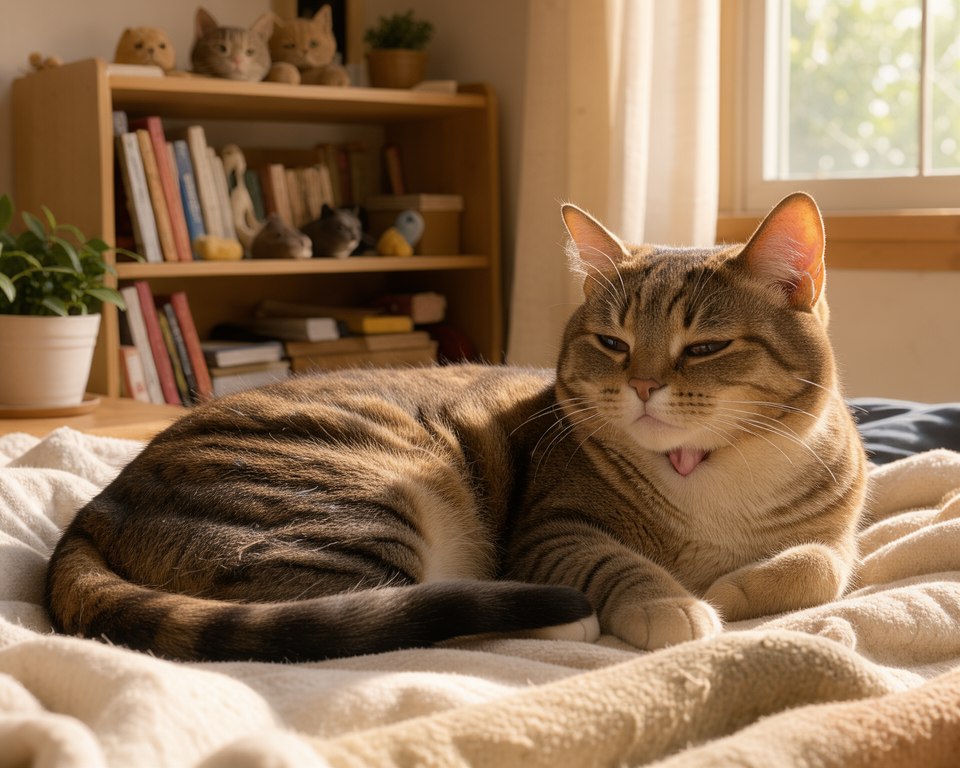
Cats may purr during friendly contact with a familiar person or another cat. A quiet purr while a cat settles beside its owner can fit a positive interaction, especially when the cat stays engaged.
That moment can look like happiness, but the sound is still only one clue. The same cat may purr in a different situation for another reason, so the scene around the cat matters.
Food and Attention Requests
A cat may purr to ask for food or attention, especially near a usual mealtime or when its owner is busy. The request can include more than one sound.
Some cats pair a purr with a high-pitched cry when soliciting food. That rising cry can make the sound more urgent than a steady rumble during quiet company.
A food-linked purr paired with a rising mew is a stronger request than a purr heard by itself.
How Cat Purring Works
A purr is a low rumble produced as the cat’s larynx vibrates during both parts of the breathing cycle. Fundamental frequency is the lowest repeating rate in a sound, measured in hertz.
The science behind cat purring involves vocal-fold vibration in the larynx, or voice box. A cat’s purr typically has a fundamental frequency of 25 to 30 Hz.
Larynx and Vocal-Fold Vibration
Air moving through the larynx helps the vocal folds vibrate, creating the low sound. People sometimes call these structures vocal cords, though vocal folds is the common anatomical term.
A 2023 experiment tested eight excised domestic-cat larynges. All eight produced self-sustained oscillations at typical purring rates without neural input or muscle contraction.
Purring Across the Breath Cycle
Cats produce purrs on alternating inhalations and exhalations. That pattern helps explain why a purring sound can seem continuous as the cat breathes in and out.
The experiment used excised larynges, not living cats. It shows that laryngeal tissue can sustain purring-rate vibrations without neural signals or muscle contraction, but it does not explain every part of purring in a living animal.
The mechanism explains the vibration, but not the emotional reason for a particular purr.
What Purring During Petting Can Mean
During petting, purring often accompanies enjoyment, but the cat’s posture and response show whether the contact still feels welcome. Body language can offer useful clues, though no single cue settles the meaning.
Relaxed ears and whiskers, small pupils, and an upright or curled tail can accompany contentment. A louder purring sound alone cannot establish happiness.
Purring During Petting and Kneading
Some cats knead with their paws while purring during a positive interaction. The repeated paw movement may happen as the cat settles into a comfortable spot, but it does not make the purr a definite mood test.
Owners can compare the cat’s face, posture, and response with its usual behavior. A cat that stays loose and continues the interaction may welcome the contact; a cat that tenses or shifts away may prefer a pause.
When Purring Gets Loud
A cat may purr loudly because the sound is more noticeable in a quiet room or because the cat is close by. Loudness by itself does not explain why the cat is purring.
Notice what happens before the louder sound. A purr that begins as petting starts may fit that moment, while a new pattern in other situations deserves attention.
Signs of Overstimulation
A cat that grabs or bites during petting may be overstimulated, even if it was purring moments earlier. The grab or bite is a cue to end contact calmly rather than continue the interaction.
| Situation | Observable cue | Likely interpretation | Response |
|---|---|---|---|
| Petting with a relaxed face and body | Loose posture, relaxed ears | Contact may be welcome | Continue gently |
| Purring with kneading | Repeated paw movement | May accompany a positive interaction | Watch the cat’s response |
| Petting followed by grabbing or biting | Grab or bite | Possible overstimulation | End contact calmly |
After a grab or bite, an owner can take three simple steps:
- Stop petting.
- Stay calm and withdraw.
- Give the cat space.
Punishment can make the interaction more stressful, so it is not a useful response. After a pause, let the cat choose whether to approach again.
When Purring May Signal Stress, Pain, or Illness
A purring cat can be stressed, ill, or in pain, so a familiar sound cannot rule out a health problem. Self-soothing may be one reason a cat purrs during a difficult moment.
A cat may purr more when ill or near the end of life. Purring does not always signal contentment, and it does not prove that a cat is healing.

Stress and Self-Soothing
Stressful situations can bring on purring, and a cat may use the sound to soothe itself. The sound alone cannot show whether the cat feels calm or distressed.
Some people suggest that purr vibrations support healing, but that idea remains a hypothesis, not an established treatment. A purr is not a substitute for veterinary care when a cat has signs of illness.
Pain, Illness, and End-of-Life Changes
A cat may purr near the end of life, but the sound does not show by itself that death is imminent. Other changes in health and behavior provide important context.
Owners can watch for these six groups of changes:
- Changes in appetite or thirst, or weight loss.
- Vomiting or diarrhea.
- Changes in litter-box habits.
- Fever or a visible injury.
- Hiding or reduced sociability.
- Low energy or less interest in usual activities.
A new purring pattern alongside other changes can signal a need for a health check. Purring can signal discomfort, so the sound should not outweigh other signs.
Seek veterinary care promptly when a new purring pattern appears alongside other changes in health or behavior.
How Purring Connects Cats With Kittens and People
Kittens and adult cats use purring in social contact, but a purr is not a literal translation of affection. Communication through sound can carry social information without spelling out an exact feeling.
Kittens can purr as young as two days old and may purr while nursing. Purring helps kittens and their mother stay in contact during nursing and bonding.
The Mother-Kitten Signal
A nursing kitten’s purr can occur during close contact with its mother. Their shared sounds are part of early social contact, even though a purr does not translate into one specific message.
As cats live with people, their sounds also become part of familiar routines. A cat may purr near an owner during a shared moment, but that alone cannot prove the cat’s exact feeling.
What a Purr Can Communicate to People
A cat’s purr may feel soothing to humans. It is not an established treatment for human illness or injury, even if listening to it feels comforting.
A 2025 study analyzed 557 purrs from 21 cats. It found 84.6% classification accuracy for purrs and 63.2% for meows, with 4.47 bits of individual information in purrs compared with 2.65 bits in meows.
Those findings suggest that purrs can carry information that helps distinguish individual cats. They do not show that a cat is expressing love. Owners can keep a few observations in mind:
- Note what happened before the purr.
- Record who was present.
- Compare the sound with that cat’s usual pattern.
A purr can help identify a familiar social moment without revealing a cat’s exact feeling.
Which Cats Can Purr, and Which Can Roar?
No, not every cat can make a true purr: domestic cats, cheetahs, and pumas can, while lions, tigers, leopards, and jaguars cannot. True purr ability depends on the animal’s anatomy.
The distinction concerns a true purr, not whether an animal makes other vocal sounds. A roar and a purr are different kinds of voice.
| Cat group | Examples | True purr ability |
|---|---|---|
| Domestic cats | House cats | Yes |
| Cheetahs and pumas | Cheetah, puma | Yes |
| Roaring cats | Lion, tiger, leopard, jaguar | No |
For a species-level answer, distinguish a true purr from other vocal sounds such as a roar.
For a species-level answer, distinguish a true purr from other vocal sounds such as a roar.
Conclusion
A purr is most useful when considered alongside the cat’s usual behavior and the situation around it. The same sound can fit a familiar social moment or appear with a request or distress.
Owners can pay attention to a change in the pattern rather than treating every purr as a fixed message. If other health changes appear, a veterinarian can help assess what is happening.
Keep a brief note of when a new pattern occurs and share it with a veterinarian if other changes raise concern.
FAQ
What is the science behind cats purring?
Cats purr through vibrations in the larynx, and their purrs typically have a fundamental frequency of 25 to 30 Hz. They purr on inhalations and exhalations. In a 2023 experiment, all eight excised domestic-cat larynges produced self-sustained oscillations at typical purring rates without neural input or muscle contraction.
How do cats say "I love you"?
Cats do not use one sound that proves they feel love. Purring, rubbing, or approaching can accompany a friendly bond, but each behavior depends on its context. An owner can notice whether the cat seeks company or repeats a familiar greeting, while remembering that no single sound reveals the cat’s exact feeling.
Do cats purr in the wild?
Yes, some wild cats can purr. Cheetahs and pumas can produce a true purr, while lions, tigers, leopards, and jaguars cannot. Those roaring cats still make other vocal sounds, so the distinction is about producing a true purr, not about whether the animal can make a sound at all.
Can a cat purr when it is dying?
Yes, a cat may purr near the end of life, but purring does not show by itself that death is imminent. Cats may also purr when stressed, ill, or in pain. Changes in health and behavior matter alongside the sound, so an owner should not use purring alone to judge how serious a situation is.
Can a cat’s purr heal people?
A cat’s purr may feel soothing, but it is not an established treatment for human illness or injury. Claims that purr vibrations support healing remain a hypothesis, not a proven way to treat a person. A comforting sound can still be enjoyable without replacing medical care when someone is sick or hurt.
Can a cat purr while meowing?
Yes, a cat can purr while making another vocalization. Cats may pair a purr with a high-pitched cry when soliciting food, so the sounds can overlap as part of a request. The combination can be more informative than the purr alone, especially when it happens near a usual mealtime.