
How to Clean Washing Machine: Easy Steps That Work
Learn how to clean washing machine with easy steps for a fresher, cleaner load. They can remove residue, tackle odors, and keep the washer working well.
The most reliable way to clean a washing machine is to run its manufacturer-approved cleaning cycle empty, then dry the parts that hold residue. A washer needs its own cleaning even though it washes clothes, because moisture, grime, and detergent residue can linger inside. The door gasket is the flexible rubber seal around a front-load washer door that can trap moisture and debris.
The right method depends on the model’s manual. Using an approved cycle and cleaner helps remove odor-causing buildup without risking damage to the washer or leaving residue behind. A musty smell or residue on the tub is a useful signal to check the washer’s care routine.
Key Takeaways
- Run the washer’s approved cleaning cycle with an empty drum.
- Check the manual before adding a cleaner or household ingredient.
- Wipe parts that collect moisture and detergent residue.
- Confirm whether the model has a user-serviceable drain pump filter.
- Let the washer dry between loads to limit dampness.
How Often to Clean a Washing Machine
A monthly cleaning cycle is a practical routine for most households, even when the washer does not display a reminder. Monthly care helps keep odor-causing residue from building up during regular washing.
Manufacturer reminders can follow a different schedule. Samsung recommends Self Clean at least monthly when its reminder has not prompted a cycle. Its reminder appears after 20 top-load washes and 40 front-load washes.
Use a monthly cleaning cycle as the default, then follow an earlier model-specific reminder when one appears.
Affresh® recommends cleaning monthly or every 30 wash cycles. LG recommends Tub Clean monthly, and some models display tcL after more than 30 wash cycles.
Follow the washer’s reminder if it comes before the calendar date. If a reminder appears sooner than the monthly date, follow the washer’s model-specific instruction.
How to Clean Washing Machine Drum
Start with an empty drum and a quick check for loose items before wiping any surface. Empty pockets and remove anything left inside so small objects do not scratch the glass or metal.
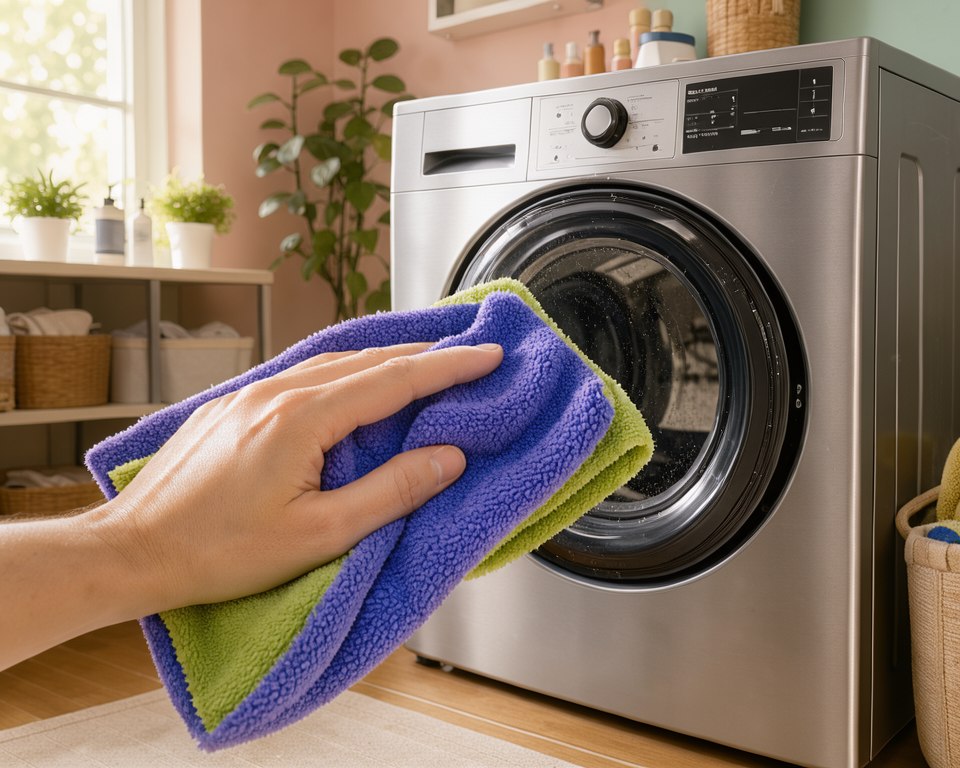
Use only mild soaps or cleaners on exterior surfaces. A damp microfiber cloth works for the drum and inside glass, while dish soap can create excessive suds in a washer.
- Remove laundry and loose items from the drum.
- Wipe the drum and inside glass or metal with a damp microfiber cloth.
- Clean exterior surfaces with a mild cleaner, then wipe them dry.
- Occasionally choose warm or hot water if laundry is normally washed cold.
To clean a washing machine drum, wipe it by hand first, then use the model-approved cleaning cycle. Baking soda is generally considered safe for most washers when the owner’s manual permits it. A baking soda cleaning method still needs to follow that manual’s directions.
A vinegar-and-baking-soda recipe is not a universal way to clean a washing machine. Follow the manual for vinegar use, and do not assume that combining vinegar and baking soda removes residue safely. Use the manual’s cleaner guidance before adding a household ingredient to the drum.
Choose a Washer-Safe Cleaning Cycle
The safest cleaning product is the one the washer’s manual approves for its dedicated cleaning cycle. Use the right setup for the model, since some cycles run empty without cleaner while others call for a specific product.
Never mix bleach with vinegar. Check the manual before using bleach or any other cleaner, and put the product only where the instructions specify.
Samsung Self Clean and Pure Cycle
Samsung Self Clean runs with the washer empty and without added cleaner. The cycle takes approximately 1 hour on top-load washers and 4 hours on front-load washers. If suds or residue remain afterward, Samsung instructs users to repeat the cycle.
Pure Cycle is a self-cleaning cycle, not a clothes-washing cycle. Samsung recommends it about every 40 washes. The cycle cleans the washer itself, so clothes should not be placed inside.
LG Tub Clean
Run LG Tub Clean with the washer empty. LG recommends an oxygen-based washer cleaner and advises against chlorine-based or acidic washer cleaners for this cycle.
If the LG manual permits liquid chlorine bleach, pour it into the bleach compartment only, up to the MAX line. Do not put a tablet or other cleaner in the dispenser unless its instructions name that location.
Using an affresh® Tablet
Place one affresh® tablet in the empty drum, not the dispenser. Select Clean Washer; if that cycle is unavailable, use Normal or Heavy with hot water.
Affresh® recommends using a tablet monthly or every 30 wash cycles. Its tablet placement is different from a liquid cleaner’s dispenser instructions, so check the product label before adding anything else.
| Option | Washer setup | Cleaner placement | Timing or frequency |
|---|---|---|---|
| Samsung Self Clean/Pure Cycle | Empty; no added cleaner | None | Self Clean: about 1 hour top-load, 4 hours front-load; Pure Cycle: about every 40 washes |
| LG Tub Clean | Empty | Oxygen-based cleaner as directed; permitted bleach goes in bleach compartment up to MAX | Monthly; some models display tcL after more than 30 washes |
| affresh® tablet cleaning | Empty; Clean Washer, or Normal or Heavy with hot water | One tablet directly in drum, not dispenser | Monthly or every 30 wash cycles |
If the cycle leaves visible suds or residue, run another cleaning cycle when the model’s instructions call for it.
Clean the Door Gasket and Lid
A front-load washer’s gasket needs attention because moisture and debris can remain tucked inside its folds. Check the folds and wipe out lint, hair, or other trapped material with a soft cloth.
Use a bleach solution on the gasket only if the washer’s care instructions allow it. Otherwise, follow the manual’s approved cleaner directions and avoid using an unapproved product on the rubber.
Front-load door gasket
Pull back the gasket gently and inspect its folds, including the lower section where water and debris can sit. Wipe the surface with a cloth and remove visible buildup without stretching or pulling hard on the rubber.
Whirlpool’s model-approved mixture is 3/4 cup (177 mL) liquid chlorine bleach in 1 gallon (3.8 L) warm tap water. Wear rubber gloves, leave the solution on the seal for about 5 minutes, then rinse with warm water.
Top-load lid and rim
Wipe the lid and rim with a damp cloth and a mild cleaner. A soft cloth can also clean the inside glass or metal without harsh scrubbing.
Mild soaps or cleaners are suitable for exterior surfaces, but the washer’s instructions still determine what is safe around its finish and parts. Rinse any approved gasket-cleaning solution from the seal and dry the surface thoroughly.
Clean the Detergent Drawer and Agitator
Detergent residue and lint can collect where the drawer and agitator meet the wash area. Removable parts need a gentle wash, and some top-load washers also have an agitator cap that requires care.
Do not force an agitator cap that resists removal. Check the manual before trying to lift or twist it, since not every cap is designed to come off.
- Pull the detergent drawer out only as far as it is designed to go.
- Wash removable parts with warm water and mild detergent, then rinse and dry them.
- Wipe the drawer dry after each wash session and deep-clean it monthly.
- Clean an agitator cap only if the manual allows it to be removed.
Cleaning a top-load washer includes checking the agitator and its cap for trapped soap or lint. Removable dispensers may not be dishwasher safe, so hand-washing is the safer choice unless the manual says otherwise.
Refit removable parts only after they are fully rinsed and dry.
Check the Washer Filter Before Cleaning It
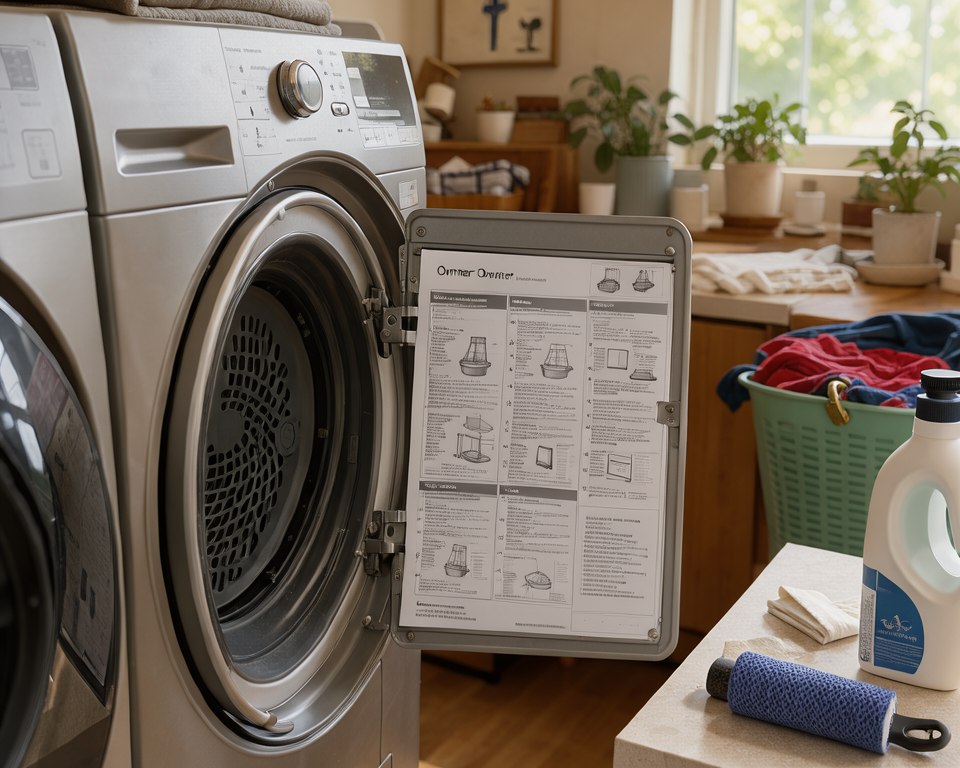
A washer may have no consumer-cleanable filter, so the model manual is the first check. Do not open a panel or remove a filter unless the manual confirms that the part is accessible and user-serviceable.
Not all washers have a filter consumers need to clean. Filter locations and access depend on the washer type and model.
Top-load washer filter
Most top-load washers made after 2001 do not have a drainage-system filter to clean. Some older models have a filter beneath the agitator, so the owner’s manual should confirm its location and removal steps.
Samsung top-load washers do not have the pump filter described for its front-load washers. A top-load washer with no listed service filter does not need a filter removed as part of routine cleaning.
Front-load drain pump filter
A front-load drain pump filter is often near the drain pump at the bottom of the washer, but some models do not make it accessible. Check the manual before opening a lower access panel or attempting to remove the filter.
Cleaning intervals follow the manufacturer’s instructions and are at least monthly in most cases. Samsung recommends cleaning its front-load pump filter at least monthly or about every 40 washes, whichever comes first.
| Washer type | Filter situation | What to do |
|---|---|---|
| Newer top-load models | Most models made after 2001 lack a drainage-system filter | Do not look for a filter to clean unless the manual identifies one |
| Some older top-load models | Filter may sit beneath the agitator | Check the manual before removing the agitator or filter |
| Front-load models | Drain pump filter often sits near the bottom; access varies | Open a panel or clean the filter only if the manual confirms access |
Clean an accessible filter on the schedule specified for that washer, not by guesswork.
Keep the Washer Dry Between Loads
Airflow between loads helps the drum dry instead of staying damp and closed. Let moisture escape by leaving the washer door or lid and detergent drawer open after use, where the model allows it.
Remove wet laundry promptly so damp clothes do not sit in the washer. Samsung recommends leaving the door and detergent drawer open between cleanings; affresh® recommends leaving a front-loader’s door or a top-loader’s lid open between loads.
Leaving a front-load washer door open after use helps limit moisture and mildew buildup. Leave the door or lid ajar only where it can remain safely out of children’s and pets’ reach.
Troubleshoot Odors and Leftover Residue
A lingering smell after one cleaning cycle can mean the washer needs a repeat clean or has residue in a hidden area. Check the cause before adding another dose, since odor can come from moisture or detergent buildup.
A drain problem needs model-specific troubleshooting, not repeated cleaner doses. A washer that does not drain normally may have an issue that a cleaning cycle cannot fix.
- For a new or long-neglected washer, repeat the cleaner process as directed.
- For strong odor or visible buildup, follow the cleaner’s repeat-cycle instructions.
- Wipe normal tablet residue from the tub with a microfiber cloth.
- Check whether excess detergent is leaving residue that traps moisture.
Stop adding cleaner if the washer fails to drain normally; a drainage issue needs its own troubleshooting steps.
Affresh® recommends repeating its cleaning process if the washer has never been cleaned, more than 6 months have passed since its last cleaning, or excessive residue or odor is present. In extreme cases, up to 3 consecutive cycles may be needed.
Tablet residue at the bottom of the tub after a cleaning cycle is normal and can be wiped away with a microfiber cloth. If the washer still smells or does not drain normally after the approved cleaning steps, check the model manual for the next service step.
Conclusion
A clean washer starts with using the right cycle for the model and keeping moisture from lingering. An empty, washer-approved cleaning cycle and dry, residue-free parts are the core of routine care.
Keeping to the model’s instructions helps avoid unnecessary products and protects parts that need special handling. Check the washer’s care manual before the next cleaning day and set a recurring monthly reminder.
FAQ
How do I clean the rubber gasket?
Wipe the gasket folds with a cloth, remove trapped debris, and dry the rubber thoroughly. Use a bleach solution only if the washer’s care instructions permit it, and wear gloves when handling bleach. Whirlpool’s approved mixture uses 3/4 cup of liquid chlorine bleach in 1 gallon of warm tap water, left on the seal for about 5 minutes. Rinse it with warm water afterward.
How does the self clean work on my Samsung washer?
Run Samsung Self Clean with the washer empty and no added cleaner. The cycle takes approximately 1 hour on a top-load model and 4 hours on a front-load model. Pure Cycle is another self-cleaning program, not a cycle for washing clothes. If suds or residue remain after Self Clean, Samsung directs users to repeat the cycle.
How do I clean my washing machine with affresh?
Put one affresh® tablet in the empty drum, not the dispenser, then select Clean Washer. If the washer does not have that cycle, use Normal or Heavy with hot water. The tablet is designed to clean the washer during that cycle, so clothes should not be inside. Affresh® recommends using a tablet monthly or every 30 wash cycles.
How to clean a washing machine filter?
First confirm in the owner’s manual that the filter is accessible and user-serviceable. A front-load drain pump filter is often near the bottom of the washer, but access differs by model. Clean an accessible Samsung front-load pump filter at least monthly or about every 40 washes, whichever comes first. Follow the manual’s steps for safely opening the access area and replacing the filter.
What is the best thing to run through a washing machine to clean it?
The best choice is the manufacturer-approved cleaning cycle and the cleaner its manual permits. Samsung Self Clean runs with the washer empty and no added cleaner. Other models may call for a specific tablet or oxygen-based product. A cleaner that works for one washer may not suit another, so the model instructions should guide product choice and placement.
Is there a filter on my top load washing machine?
Most top-load washers made after 2001 do not have a drain-system filter that needs cleaning. Some older top-load models have a filter beneath the agitator. The owner’s manual identifies whether that part exists and explains whether it can be removed by the washer owner. Do not force an agitator or cap to reach a filter without those instructions.
Do all washers have a filter that needs to be cleaned?
No, not all washers have a consumer-cleanable filter. Most newer top-load models lack a drainage-system filter, and some front-load filters are not accessible to the owner. The model manual explains whether a filter exists, where it sits, and whether it is user-serviceable. A washer without an accessible filter does not need one removed during routine cleaning.
How do I clean the filter on my top load washing machine?
Check the manual first, because most newer top-load washers do not have a drain-system filter to clean. Some older models have a filter beneath the agitator, but the manual must confirm its location and removal steps. If the model has a user-serviceable filter, follow those steps rather than forcing the agitator or cap. Clean only the filter the manual identifies.